English
 Español

 Get a Quote
 Find a Location
 Call an Agent
 Get a Quote
 Find a Location
 Call an Agent
Top Things to Know When Driving in Chicago
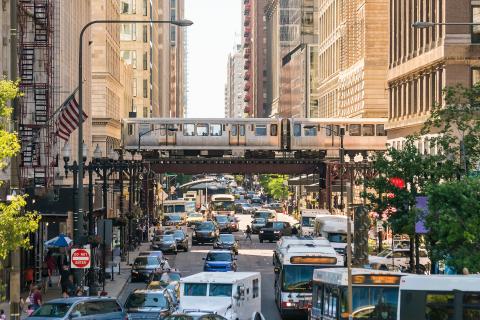
If you’re a new driver or a recent transplant, Chicago driving may feel disconcerting. From bustling downtown avenues to random one-way streets, the city can be hard to navigate at times.
Chicago’s web of traffic quirks and driving rules may trip up even competent drivers. If you’re new to driving in the area, here are some things to know about local traffic, weather conditions, and auto insurance coverage that may help you navigate driving in Chicago.
Understanding Chicago traffic patterns
Rush hour madness
Let’s start with timing. Like many cities, avoiding rush hour can be key for driving without massive traffic. If you can avoid Chicago traffic times like between 7–9 AM and 4–6:30 PM on weekdays, it may help you steer clear of bumper-to-bumper congestion.
Hotspots to watch
Some areas in Chicago can be traffic magnets. Downtown, especially around the Loop, can be gridlocked with cars, trucks, and buses. Expressways like I-290 (Eisenhower), the I-90/94 (The Kennedy), and Lake Shore Drive can be notorious for slowdowns. The Kennedy may be troublesome for commuters due to the extensive traffic during peak times. Avoiding the popular Chicago highways during rush hour may help you get to your destination quicker.
One-way streets galore
Chicago loves one-way streets, and sometimes, they may feel like they outnumber the two-way ones! This is where a solid, updated GPS can help prevent you from driving down a street the wrong way. The city often updates traffic patterns, so even if you think you know the way, double-checking your route and staying alert for street signs can help you avoid a driving accident.
Familiarize yourself with Chicago events
Big events may bring big traffic. Planning to drive during Lollapalooza, a Cubs or Sox game, or during a local summer street fest may mean extensive traffic delays. Checking the city website or your neighborhood’s chamber of commerce site may help you understand which streets are closed or have detours during certain events.
Parking confusion
Parking in Chicago can feel like an art form. Rates may vary wildly depending on where you are in the city. Street parking in residential neighborhoods may cost $2–$7 per hour, while garages downtown can be over $20 an hour. If you’re unsure of how expensive your parking will be, it can be helpful to check signage carefully. You can also help lower your parking costs by opting for public transit instead.
Watch for pedestrians and cyclists
Neighborhoods like Lincoln Park, Wicker Park, and the Loop are full of foot traffic, scooter drivers, and cyclists. Luckily, Chicago has improved its bike lanes and pedestrian zones, helping to provide clear pathways for non-vehicle users. Bike paths are not apparent everywhere in the city, so it may be crucial to stay alert for bikers and joggers, especially during the summer months. Checking your rearview and side mirrors before making right turns can also help prevent an accident with a biker.
Prepare for ever-changing weather
Alongside standard driving precautions, Chicago drivers are typically accustomed to watching for harsh or shifting weather conditions. Here is what to know about the city’s weather that may help you drive locally:
- Snow and ice: Winter can make roads slicker, highways icier, and your vision less dependable. Stocking up on windshield wiper fluid can help prevent freezing, and updating your wiper blades may help you avoid snow pileups.
- Heavy rain: Flooded underpasses can sneak up fast. Driving slowly when it rains can help you navigate slippery roads or large puddles.
- Sudden weather shifts: Driving in Chicago may lead to quick drops in visibility or traction. Increasing your following distance, even in normal weather conditions, may help you avoid accidents while in the city.
Know Chicago Driving Laws
Using the phone while driving
In Illinois, it’s prohibited to use your cellphone for a hands-free call or through Bluetooth technology unless you’re 19 or older. In 2024, a law was passed that made it illegal to use teleconferencing apps or social media while driving. If you need to make an important call or check your email, it may be crucial to pull off to the side of the road to do so.
Speed cameras and red-light enforcement
Chicago is a city where speed cameras and traffic enforcement can be widely present. Red-light and speed cameras are posted across the city, typically near schools and parks. Even driving 6 mph over the speed limit may lead to fines. Abiding by driving and traffic laws can help you avoid expensive tickets from Chicago monitoring systems.
Slow down for school zones
Going over 20 mph in a school zone may lead to steep fines, even if kids aren’t visible. It can be helpful to scan the road for traffic signs that indicate speed changes. Slowing down and staying alert around school zones may help you avoid accidents and immersive fines.
Having auto insurance that works for you
Finding an auto insurance policy that aligns with your needs can help you navigate a bustling city like Chicago. Whether you’re looking for the state’s minimum coverage or a full coverage auto insurance policy, Illinois Vehicle Insurance Agency, LLC (Illinois Vehicle) can assist you with locating the right coverage for you.
Considering a policy today? Call Illinois Vehicle today at 1-630-581-4805, visit one of our Chicagoland stores, or get a free quote online. Our experienced, Spanish-bilingual agents can help you identify your Chicago car insurance needs.
Disclaimer:
This material is for general informational purposes only. Products, services, and discounts referenced herein are not available in all states or in all companies. All statements are subject to the terms, exclusions, and conditions of the applicable policy. In all instances, current policy contract language prevails. Coverage is subject to individual policyholders meeting the insurer's underwriting qualifications and state availability. Other terms, conditions and exclusions may apply.